Vascular Dementia: An Overview
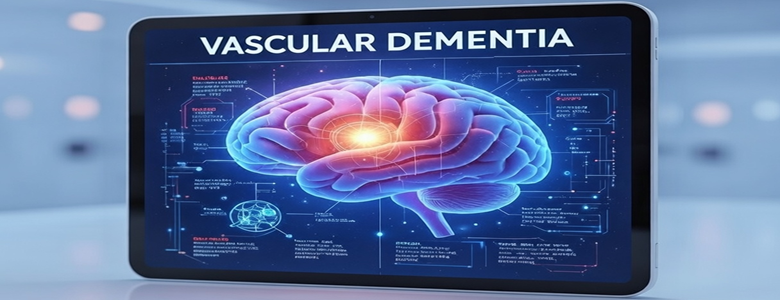


Vascular dementia (VaD) is a common form of dementia caused by reduced or interrupted blood flow to the brain. When brain tissue is starved of oxygen and nutrients, cells are damaged or die. The result is problems with thinking, planning, memory, walking and everyday tasks.
It is the second most frequent cause of dementia after Alzheimer’s disease. Unlike Alzheimer’s, which is driven mainly by abnormal protein build up, vascular dementia is linked to disease of the blood vessels - strokes, mini strokes (transient ischaemic attacks), cerebral small vessel disease, and long term damage from high blood pressure, diabetes, heart disease, smoking and high cholesterol.
Symptoms vary according to which parts of the brain are affected. After a large stroke they may appear suddenly. In small vessel disease they often build more slowly, with stepwise worsening after further vascular events. There is no cure, but further damage can often be slowed by treating the underlying vascular risks.
This overview provided by Dementia Hub covers symptoms, how common the condition is, causes and risk factors, diagnosis, coping strategies, medicines, research, and the impact on families. It draws on clinical guidance and public data available up to September 2026.
Vascular Dementia Symptoms
Signs of vascular dementia vary because blood flow damage can strike in many different regions of the brain. Memory loss is often less prominent at the start than in Alzheimer’s disease with problems relating to planning, attention, speed of thought and walking more typical.
Thinking problems
Difficulty planning, organising, solving problems and doing more than one thing at a time is common early on. Managing money, following a recipe or switching between tasks can become hard. Memory is often affected, but people may recall information if given a cue. Thinking and reactions can also slow.
Movement and physical signs
Subcortical small vessel disease can cause a short stepped, unsteady gait and falls. A stroke may leave weakness or paralysis on one side. Tremor and stiffness are less typical of pure vascular dementia but can appear when Parkinson’s disease or another condition is also present. Bladder urgency or incontinence is common in subcortical disease because pathways that control the bladder are disrupted. A drop in blood pressure on standing (orthostatic hypotension) increases fall risk.
Mood and behaviour
Depression, apathy and loss of interest are frequent, especially when frontal networks are involved. Anxiety, irritability and emotional lability also occur and add extra strain for families and carers. Delusions or hallucinations are uncommon in pure vascular dementia but can appear in mixed disease.
How it progresses
After a major stroke, decline may be abrupt. After several smaller events the course is often stepwise: a period of stability, then a sudden dip. Small vessel disease can instead decline more gradually, which is one reason it is mistaken for Alzheimer’s.
Main types
- Post stroke dementia begins soon after a clinically evident stroke. About one in five stroke survivors has dementia at one year; the five year risk after stroke is around one in three, and it is much higher after a severe stroke than after a minor stroke or TIA
- Subcortical ischaemic vascular dementia comes from long term small vessel disease, with white matter damage and small deep infarcts (lacunes) on MRI.
- Multi infarct dementia follows repeated strokes in the brain’s cortex.
- Mixed dementia combines vascular damage with Alzheimer (or other) pathology. Autopsy and imaging studies suggest this overlap is very common in older people - often in the range of 30 to 50% of examined brains, and a World Stroke Organization 2026 fact sheet estimates mixed vascular degenerative dementia at about 16% of all dementia cases in addition to “pure” VaD.
Survival after a vascular dementia diagnosis is often shorter than after Alzheimer’s disease, typically cited at around three to five years, largely because of heart disease, further strokes and frailty. Individual outlook varies widely and improves when vascular risks are treated.
Early recognition and aggressive control of blood pressure, diabetes, atrial fibrillation and smoking can ease symptoms and protect remaining brain function.
Epidemiology and Case Numbers
Vascular dementia is usually reported as about 10 to 20% of all dementia diagnoses in life. Studies with brain examination after death put pure vascular dementia at around 15% of dementia, with mixed vascular and degenerative dementia adding about another 16%. The World Stroke Organization’s 2026 fact sheet estimates roughly 8.5 million people worldwide with pure VaD and 9.1 million with mixed dementia. If those proportions are accurate, combined vascular related dementia could approach 43 million people by 2050. Cerebrovascular damage is even more widespread than these labels suggest, because silent infarcts and white matter disease often sit alongside Alzheimer’s pathology.
WHO still cites 57 million people living with dementia in 2021, with nearly 10 million new cases a year. Standard projections are about 78 million by 2030 and 139 million by 2050 (some Global Burden of Disease models are similar, around 138 million). A figure of 152 million by 2050 is not the current WHO headline number and should not be used as if it were.
In the United Kingdom, around 982,000 people live with dementia (often rounded to nearly one million), projected to reach 1.4 million by 2040. If vascular dementia accounts for roughly 10 to 20% of cases, that implies about 100,000 to 200,000 people with a vascular dementia diagnosis, plus many more with mixed disease. A UK Biobank analysis reported vascular dementia as 17.9% of dementia cases in that cohort. Prevalence is higher where stroke and vascular risk are high.
In the United States, a 2025 American Heart Association / American Stroke Association statement estimated about 2.7 million people aged 65 and over living with vascular or mixed dementia, and more than 600,000 new cases a year. Quoting 7.2 million as a vascular dementia figure is incorrect; that number refers to Alzheimer’s dementia.
Risk rises with age. Men have a slightly higher rate of stroke and therefore of post stroke dementia; women still account for a large share of later life cases because they live longer. High blood pressure, diabetes, smoking, atrial fibrillation and previous stroke or TIA concentrate risk. Diagnosis is imperfect: many people labelled with Alzheimer’s have substantial vascular disease, and the reverse also occurs. That mix delays the right prevention plan.
Vascular dementia is one of the more preventable dementias. That is why blood pressure control, smoking cessation and stroke services matter as much as memory clinics.
Pathophysiology and Risk Factors
Vascular dementia develops when the brain’s blood supply fails often enough, or for long enough, to injure tissue. Low oxygen, cell death and scarring follow. The pattern of injury explains the symptoms.
Main mechanisms
- Large vessel disease: atherosclerosis or clots in major arteries cause territorial strokes and damage in a defined brain region.
- Small vessel disease: chronic damage to tiny penetrating arteries produces white-matter hyperintensities, lacunes and microbleeds. These MRI changes are very common in later life and are found in most people with vascular cognitive impairment.
- Hypoperfusion: poor overall or regional flow, often from heart failure, severe carotid disease or low blood pressure, injures deep and watershed areas.
- Haemorrhage: intracerebral bleeds and cerebral amyloid angiopathy can also cause cognitive decline, though they are a smaller share of cases.
Brain examination often shows infarcts, lacunes and white matter damage together with Alzheimer plaques and tangles. More than half of older people classified clinically as having vascular dementia have some Alzheimer change. That is why “pure” and “mixed” labels blur in real life.
Modifiable risk factors
High blood pressure is the single most important. Diabetes, smoking, obesity, high LDL cholesterol, physical inactivity, poor diet, heavy alcohol use, sleep apnoea and air pollution all add risk. Atrial fibrillation and other heart disease raise the chance of embolic stroke. Previous stroke or TIA is a powerful warning: a substantial minority of survivors develop dementia within five years.
Non modifiable and genetic factors
Age is the strongest risk. Male sex slightly increases stroke risk. Rare inherited small vessel diseases include CADASIL, caused by NOTCH3 mutations, which can produce migraine, recurrent lacunar strokes and dementia in mid adulthood. Other rare genes (for example HTRA1, COL4A1) also cause familial small vessel disease.
Treating blood pressure, stopping smoking, anticoagulating atrial fibrillation when indicated, and preventing a second stroke remain the most effective ways to stop vascular dementia getting worse.
Vascular Dementia Diagnosis
Diagnosis rests on the individuals history, a full cognitive assessment and brain imaging that links thinking problems to cerebrovascular disease. Older research criteria such as NINDS - AIREN (1993) and DSM-5 are still cited. In 2025, international experts published the VasCog-2-WSO criteria, endorsed by the World Stroke Organization, covering preclinical, mild and major vascular cognitive impairment and setting out how imaging and fluid biomarkers should be used. In the UK, NICE guideline NG97 (last reviewed October 2025) remains the main service framework for assessment and support.
Core features clinicians look for
- A decline in at least two thinking domains that interferes with daily life, often with prominent slowing, attention or executive problems rather than isolated memory loss.
- Imaging evidence of stroke, lacunes, strategic infarcts or extensive white matter disease that can explain the symptoms.
- A time link to a stroke or TIA when that is the cause. Small vessel disease may have no single dramatic event.
Useful investigations
- MRI is preferred over CT where possible. It shows white matter disease, lacunes, microbleeds and recent infarcts more clearly. CT is faster and useful in acute stroke but misses finer small vessel change. Claims of “90% accuracy” overstate what any single scan can do; imaging must be read with the clinical picture.
- Cognitive tests: the Montreal Cognitive Assessment (MoCA) and tests of executive function (for example the Frontal Assessment Battery) often detect vascular cognitive impairment better than the MMSE, which is more memory weighted.
- Vascular work up: blood pressure, blood glucose and HbA1c, lipids, ECG for atrial fibrillation, and smoking history. Further heart or carotid tests follow if indicated.
- Blood or CSF Alzheimer biomarkers (including p-tau217) help when mixed disease is suspected. A positive Alzheimer marker does not rule out a vascular contribution.
The hardest task is separating pure vascular dementia, Alzheimer’s disease and mixed dementia. About 30 to 50% of older people with dementia have both kinds of change. Getting that distinction as right as possible matters because vascular risks can still be treated even when Alzheimer pathology is also present.
Coping Strategies
There are no current treatments that reverses established vascular damage. Care therefore aims to prevent the next stroke, keep people as independent as possible and support both families and carers.
Lifestyle
A Mediterranean style or DASH style diet - vegetables, fruit, whole grains, fish, nuts, olive oil and limited salt - supports heart and brain health. Aim for at least 150 minutes a week of moderate activity if mobility allows; even regular walking helps. Stopping smoking is one of the highest value steps; stroke risk begins to fall within a few years. Keep alcohol within UK low risk guidelines. Treat hearing and vision problems, which compound confusion and isolation.
Home and routine
Remove trip hazards, fit handrails and consider a walking aid. Keep a simple daily timetable and use pill boxes, calendars and labelled cupboards. Good lighting and a clear path to the toilet reduce night time falls and incontinence accidents.
Therapies
Cognitive rehabilitation can target planning and attention. Physiotherapy helps gait and balance in subcortical disease. Occupational therapy adapts the home. Speech and language therapy is important when communication or swallowing is affected (swallowing problems raise the risk of pneumonia). Psychological therapy, including CBT, can help depression and anxiety. Antidepressants are sometimes needed as well.
Support
Alzheimer’s Society and the Stroke Association both support people with vascular dementia. Memory cafés and carer training reduce isolation. Discuss lasting powers of attorney, future care wishes and driving early - a diagnosis does not automatically ban driving, but the DVLA must be told and an assessment may be required.
Benefits and practical help
Ask about a needs assessment, a carer’s assessment, Attendance Allowance or Personal Independence Payment, Carer’s Allowance and local respite. Contact Alzheimer’s Society on 0333 150 3456, or the Stroke Association helpline, for tailored advice.
Pharmacological Treatments
No medicine is licensed specifically to reverse vascular dementia with current treatments having two core aims: control vascular risk, and ease symptoms when that is appropriate.
NICE and UK practice
NICE does not recommend cholinesterase inhibitors (donepezil, rivastigmine, galantamine) or memantine for pure vascular dementia. They may be considered if clinicians suspect mixed disease with Alzheimer’s, Parkinson’s disease dementia or dementia with Lewy bodies. Alzheimer’s Society’s 2026 guidance is the same: Alzheimer drugs are not recommended for vascular dementia alone. Modest trial benefits, where they exist, are more convincing in mixed disease. Side effects can often include nausea, agitation, dizziness and falls.
Vascular risk medicines — the mainstay
- Blood pressure drugs, often aiming for an individualised target around 130/80 mmHg or lower in fitter people, reduce further stroke. Targets must be balanced against falls and low diastolic pressure in frail older adults.
- Statins lower LDL cholesterol and vascular events.
- Diabetes treatment (including metformin and, where suitable, SGLT2 inhibitors or GLP-1 receptor agonists) protects heart, kidney and, potentially, brain vessels.
- Antiplatelets (aspirin or clopidogrel) after ischaemic stroke or TIA, chosen according to stroke prevention guidelines.
- Anticoagulants for atrial fibrillation when the benefit outweighs bleeding risk.
These decisions belong with the GP, stroke team or geriatrician and do not start or stop blood thinners without seeking their clear advice.
Mood and behaviour
SSRIs such as sertraline are widely used for depression after stroke. Antipsychotics should be last resort for severe distress. Risperidone and some other antipsychotics increase stroke risk in people with dementia; any use should be short, reviewed often and discussed openly with families.
A named “VANTAGE 2024” combination trial of donepezil plus memantine in vascular dementia is not an established, practice changing result.
Treatments and Clinical Trials
As of September 2026 there is still no approved disease modifying drug for vascular dementia. Whilst the trial pipeline is smaller than for Alzheimer’s disease it is more active than a decade ago. A 2025 review of the vascular cognitive impairment pipeline found dozens of trials, many testing existing heart and stroke medicines rather than brand new molecules.
Approaches under study
- Cilostazol (a phosphodiesterase-3 inhibitor already used for claudication and, in some countries, stroke prevention) and isosorbide mononitrate have been tested in UK small vessel disease trials (the LACI programme). LACI-2 suggested possible benefits on some cognitive and imaging measures; LACI-Cog1, a feasibility study in vascular cognitive impairment, began recruiting in 2026. These drugs are not licensed for dementia.
- Better blood pressure, lipid and diabetes control remains the intervention with the strongest evidence.
- Anti-inflammatory, perfusion and neuroprotective agents are in earlier phases. Stem cell and gene therapies (including NOTCH3 work in CADASIL) are experimental.
- Blood biomarkers such as neurofilament light (NfL) and advanced MRI are being developed to pick trial participants more accurately.
The most important “trial result” for ordinary care is still prevention. The 2024 Lancet Commission estimated that tackling 14 modifiable risk factors could theoretically prevent or delay about 45% of dementia cases. Several of those factors - blood pressure, smoking, diabetes, cholesterol, obesity, inactivity - are the same ones that drive vascular dementia.
Be wary of claims about psoriasis drugs, unproven stem cell clinics or “brain waste clearance” products. Early laboratory or small studies are not the same as a treatment.
Societal and Caregiver Impact
Vascular dementia adds to the overall cost of dementia, estimated at US$1.3 trillion globally in 2019 and projected at about US$2.8 trillion by 2030. In the UK, dementia cost around £42 billion in 2024, forecast to reach about £90 billion by 2040. People with vascular dementia often have more hospital admissions than those with Alzheimer’s disease because of stroke, heart failure, falls and infections, which raises NHS and social care spending.
Unpaid families still provide much of the care - frequently several hours a day with washing, meals, medicines and safety. Burnout, depression and lost income are common. Women do most unpaid care and also live longer with dementia themselves.
WHO’s dementia action plan now runs to 2031. In the UK, the Dame Barbara Windsor Dementia Mission and NHS planning continue to push earlier diagnosis and better trials, even though the old 66.7% diagnosis rate target has been dropped from recent operational guidance. Stroke services, blood pressure programmes and smoking cessation are dementia policy as well as heart disease policy.
Future Directions and Conclusions
Factcheck 06/09/2026
Grok (X): We checked this on 6 September 2026 against WHO, NICE and UK sources. The big numbers, NHS drug advice and prevention points still hold up.
Google AI: This article is highly accurate, incorporating 2026 data like the World Stroke Organization fact sheet and VasCog-2 criteria. It correctly reflects UK practice.
Dementia Hub: This page has been verified accurate via the above AI engines, we recommend consulting a fully trained health official before making any changes to your diet, medication or routine.